
As I have started learning more about chocolate, I’ve already run into something that can be a little confusing.
Sometimes I see the word cacao.
Other times I see cocoa.
We have cacao beans, cacao nibs and cacao percentages. But then we have cocoa powder, cocoa butter and hot cocoa.
So are cacao and cocoa two different things?
I had always thought of cocoa as the powder you use for baking or making hot chocolate. I really hadn’t given much thought to the word cacao until I started seeing it more often on dark chocolate bars and reading about craft chocolate.
It turns out the answer isn’t quite as simple as I expected.
Cacao and Cocoa Come From the Same Place
Let’s start with the easiest part.
Cacao and cocoa aren’t two different plants.
Both come from the cacao tree, Theobroma cacao, and ultimately from the seeds—or beans—inside the fruit produced by that tree.
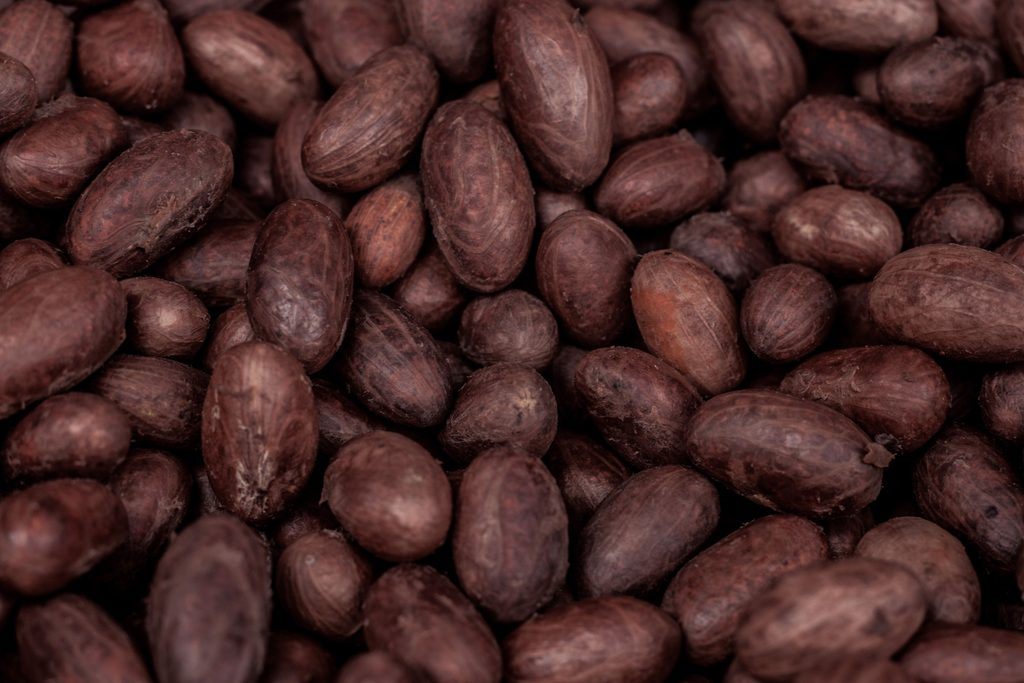
Those cacao beans are what eventually become the chocolate we eat.
So when you see cacao and cocoa, we’re talking about products that originated from the same basic ingredient.
The confusing part is how the two words are used.
So What’s the Difference Between Cacao and Cocoa?
There isn’t one universally followed rule that determines exactly when something must be called cacao rather than cocoa.
Generally, cacao is more often used when talking about the plant, fruit, beans and products closer to the beginning of the chocolate-making process.
That’s why you’ll commonly hear terms such as:
cacao tree
cacao pod
cacao beans
cacao nibs
cacao percentage
The word cocoa is more commonly used for processed cacao products and familiar chocolate ingredients and foods.
That’s where we get terms such as:
cocoa powder
cocoa butter
cocoa solids
hot cocoa
But even those distinctions aren’t absolute.
Different chocolate makers, food companies and writers sometimes use cacao and cocoa differently.
That’s why trying to create a rule such as “cacao is raw and cocoa is roasted” can cause problems.
Is Cacao Raw and Cocoa Roasted?
I’ve seen this explanation before:
Cacao = raw.
Cocoa = roasted.
It certainly makes things easy to remember.
Unfortunately, it isn’t a reliable rule.
Cacao beans typically undergo several stages of processing before becoming chocolate, including fermentation and drying. Chocolate makers may then roast the beans before turning them into chocolate.
Yet the finished chocolate bar might still proudly say 70% cacao on the package.
Clearly, that doesn’t mean 70% of the bar consists of raw cacao beans.
“Cacao” is often used because that’s the terminology preferred by a particular chocolate maker or because they’re referring to the cacao-derived portion of the chocolate.
So I wouldn’t assume that something labeled cacao is automatically raw or less processed than something labeled cocoa.
If processing matters to you, the better approach is to look at the product description and how the manufacturer says it was made.
What Exactly Is a Cacao Bean?
Here’s another thing I’ve learned.
What we commonly call a cacao bean isn’t really a bean like a kidney bean or black bean.
It’s the seed of the cacao fruit.
Cacao trees produce colorful pods containing seeds surrounded by a sweet pulp.
After the pods are harvested, those seeds are removed and generally fermented and dried.
Those dried seeds are what we commonly call cacao beans.
From there, they can be roasted, cracked and processed further to eventually become chocolate.
It’s quite a journey from a tropical fruit growing on a tree to the chocolate bar sitting next to my computer!
What Are Cacao Nibs?
You’ve probably seen bags of cacao nibs in grocery stores or health-food sections.
Cacao nibs are simply small pieces of crushed cacao beans after the outer shell has been removed.
They don’t taste like chocolate candy because they haven’t had sugar and the other ingredients we associate with a chocolate bar added to them.
They tend to have a strong cacao flavor and can be quite bitter.
I’d like to try cacao nibs by themselves as part of my Chocolate Curious education because I’ve eaten plenty of finished chocolate without ever paying much attention to what chocolate tastes like before sugar enters the picture.
Then What Is Cocoa Powder?
Cocoa powder comes farther along in the process.
Cacao beans are processed into what is commonly called chocolate liquor or cocoa mass. Despite the word “liquor,” there isn’t alcohol involved.
That mass contains both cocoa solids and cocoa butter.
When much of the cocoa butter is pressed out, the remaining cocoa solids can be ground into cocoa powder.
That’s the familiar powder used in baking, brownies, cakes and beverages.
And this is where another distinction becomes useful.
Cocoa powder isn’t the same thing as the powdered hot-chocolate mix you might pour into a mug.
Hot cocoa mix usually contains cocoa powder along with sugar and potentially milk powder and other ingredients.
Pure cocoa powder is considerably less sweet—because it may contain no added sugar at all.
What About Cocoa Butter?
The name used here confused me at first too.
If we’re talking about cacao beans, why is it normally called cocoa butter instead of cacao butter?
Again, it mostly comes down to convention.
Cocoa butter is the natural fat found inside cacao beans.
It is an important part of chocolate because it contributes to that wonderful characteristic chocolate has of being solid at room temperature but melting smoothly in your mouth.
And despite the word “butter,” it isn’t dairy butter.
It’s plant fat from the cacao bean.
Why Do Chocolate Companies Use the Word Cacao?
This was another question I had.
Why does a dark chocolate bar say 70% cacao rather than 70% cocoa?
The percentage refers to the portion of the chocolate that comes from cacao-derived ingredients.
Those ingredients can include cocoa solids and cocoa butter.
That’s why, as I discussed in my article about what 70% cacao actually means, that percentage isn’t simply telling you how much cocoa powder is in the bar.
A 70% cacao chocolate gets approximately 70% of its weight from ingredients originating with the cacao bean.
Once I understood that, the wording on chocolate wrappers started making a lot more sense.
Is Cacao Healthier Than Cocoa?
This is an area where I’d be cautious.
You’ll sometimes see cacao marketed as a healthier or more natural alternative to cocoa.
But simply seeing the word cacao on a package doesn’t tell you enough to determine whether one product is healthier than another.
How the cacao was processed matters. So do the other ingredients in the product, the amount consumed and what you’re comparing it with.
A chocolate bar marketed with the word “cacao” can still contain plenty of sugar.
And cocoa powder isn’t automatically unhealthy because someone chose to call it cocoa rather than cacao.
That’s another reason I’m learning to look beyond the marketing words on the front of the package.
Cacao vs. Cocoa: The Simple Answer
After looking into all of this, here’s the easiest way I’m going to remember it:
Cacao and cocoa originate from the same plant and the same seeds.
“Cacao” is commonly used when discussing the tree, fruit, beans and earlier stages of chocolate production, while “cocoa” is commonly used for certain processed ingredients and familiar products such as cocoa powder.
But there isn’t a simple dividing line where cacao suddenly becomes cocoa.
And cacao doesn’t automatically mean raw while cocoa automatically means roasted.
The terminology is simply more flexible than that.
Another Chocolate Mystery Solved
Before starting Chocolate Curious, cacao and cocoa were just two words I saw on chocolate packages without thinking much about them.
Now I know they’re connected to the same remarkable little seed that eventually becomes everything from cocoa powder to a milk chocolate candy bar to an expensive single-origin dark chocolate bar.
And learning that brings up another question.
If all chocolate begins with cacao beans, how do those beans actually become a chocolate bar?
That’s something we’ll explore as I continue becoming more Chocolate Curious.
For now, the next time I see “cacao” on the front of a chocolate bar and “cocoa butter” in the ingredients on the back, at least I’ll understand why I’m seeing both words.
And that’s one more thing I didn’t know about chocolate when I started this journey.